
Healing Through Art – Pathways to Embodied Transformation
Most advice about art healing overlooks a powerful truth: creative expression rewires the brain and sparks emotional transformation. For spiritual seekers and embodied artists, especially women embracing both shadow and divine feminine energy, these breakthroughs matter deeply. Whether you feel inspired by American trailblazers or seek guidance across cultures, this exploration exposes what art healing really means, challenges common myths, and shows how transformative art becomes a gateway to personal growth.
Table of Contents
Key Takeaways
| Point | Details |
| Healing Through Art | Art serves as a powerful tool for emotional transformation and psychological restoration, extending beyond mere coping mechanisms. |
| Multisensory Engagement | Engaging multiple senses through art facilitates deeper psychological insights that traditional therapies may miss. |
| Importance of Ethical Practices | Practitioners must prioritize confidentiality and informed consent to create safe and empowering environments for art healing. |
| Courageous Shadow Integration | Embracing difficult emotions as part of the healing journey leads to personal transformation and enhances creative expression. |
Healing Through Art Defined and Debunked
Healing through art transcends traditional therapeutic approaches, offering a profound pathway for emotional transformation and psychological restoration. Neurological research reveals that creative engagement activates complex neural circuits responsible for emotional processing, suggesting art is far more than a simple coping mechanism.
Contrary to popular misconceptions, art healing is not about producing museum-worthy masterpieces but about authentic self-expression and internal exploration. Global studies during pandemic isolation demonstrated that creative practices serve as scalable mental health support, particularly empowering marginalized populations through symbolic creation and emotional processing. This approach recognizes art as a dynamic, adaptable healing modality that bridges psychological restoration with personal narrative.
The core mechanisms of art healing involve multisensory engagement, allowing individuals to externalize internal experiences through visual metaphors, movement, and symbolic representation. By translating complex emotional landscapes into tangible expressions, practitioners can access deeper psychological territories that traditional verbal therapies might not reach. The process involves neurological rewiring, emotional discharge, and integrative healing that connects body, mind, and spirit.
Pro tip: Begin your art healing journey by selecting materials that intuitively resonate with your current emotional state, allowing spontaneous expression without judgment or predetermined outcomes.
Types of Transformative Art Practices
Transformative art practices encompass a rich spectrum of creative modalities designed to facilitate deep psychological healing and personal growth. These practices go beyond traditional art-making, serving as powerful vehicles for emotional exploration, self-discovery, and energetic recalibration.
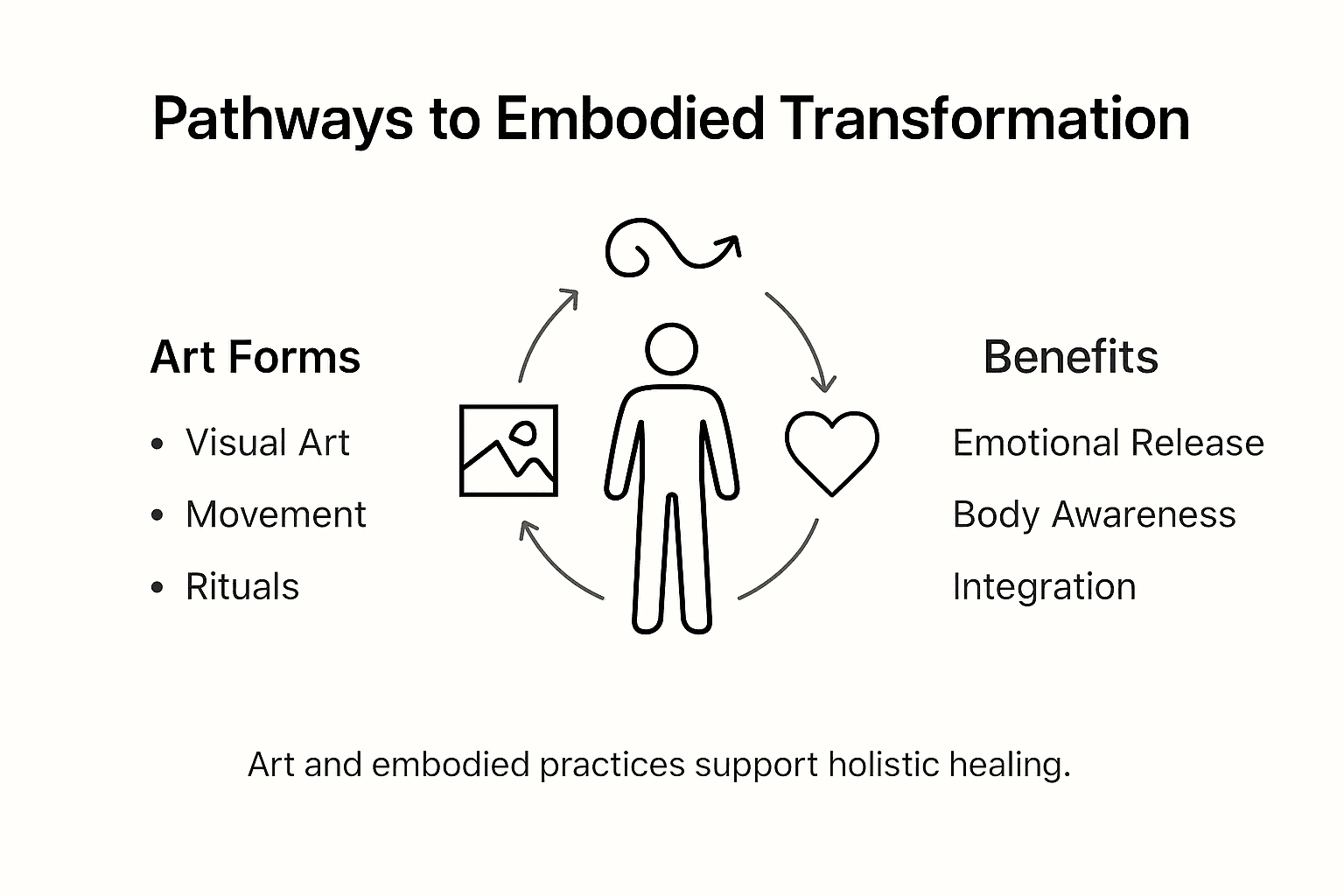
Embodied Art Practices represent a holistic approach to healing, integrating physical movement, visual expression, and somatic awareness. These practices include:
-
Intuitive Painting: Spontaneous creation without predetermined outcomes
-
Movement Meditation: Combining dance, gesture, and artistic expression
-
Ritual Art Making: Intentional creative processes that honor personal transformation
Symbolic art techniques provide another profound pathway for psychological integration. These methods leverage metaphorical representation to externalize internal experiences, allowing practitioners to engage with complex emotions through visual language. Techniques like mandala creation, shadow journaling, and archetypal imagery work enable individuals to map their inner landscapes, revealing unconscious patterns and facilitating healing.
Pro tip: Create a dedicated sacred space for your art healing practice, selecting materials and environments that feel emotionally safe and energetically supportive.
Here’s a summary of how different transformative art practices support healing:
| Practice Type | Core Focus | Example Technique | Unique Healing Benefit |
| Embodied Art | Physical and emotional unity | Movement meditation | Promotes somatic awareness |
| Symbolic Art | Psychological integration | Mandala drawing | Reveals unconscious patterns |
| Ritual Art Making | Intentional transformation | Creative ceremonies | Honors personal change and growth |
Embodied Art: How It Facilitates Healing
Embodied art represents a profound healing modality that integrates physical sensation, emotional expression, and creative exploration. Neurological research reveals that creative engagement activates specific brain circuits responsible for emotional regulation, transforming art-making from a mere aesthetic practice into a powerful therapeutic intervention.
Body-centered art practices emerge as a critical pathway for healing, recognizing that trauma and emotional experiences are stored not just mentally, but within our physical tissues. Phenomenological studies of art therapists highlight how embodied techniques like body mapping, self-touch, and intuitive movement can unlock deep psychological insights. These methods allow practitioners to explore and release stored emotional patterns through intentional creative expression.
The healing mechanisms of embodied art are multidimensional, involving neurological, psychological, and energetic processes. By engaging multiple sensory systems simultaneously, individuals can bypass verbal language limitations, accessing more primal and authentic modes of emotional processing. Techniques such as intuitive movement, somatic drawing, and ritualistic art creation provide safe containers for exploring complex inner landscapes, enabling transformative experiences that integrate mind, body, and spirit.
Pro tip: Begin your embodied art practice by creating a nurturing environment with soft lighting, comfortable clothing, and materials that feel emotionally resonant, allowing your body to guide the creative process.
Integrating Shadow and Divine Feminine Energy
Shadow integration represents a profound journey of reclaiming disowned aspects of feminine energy, challenging societal narratives that have historically suppressed emotional complexity. The Jungian understanding of shadow feminine reveals how repressed emotions like rage, jealousy, and vulnerability are not weaknesses, but powerful sources of personal transformation and authentic self-expression.
Embracing the dark feminine archetype involves courageously acknowledging the full spectrum of emotional experience. Shadow work explores the transformative potential of integrating both light and shadow aspects of feminine energy, supporting emotional sovereignty and holistic healing. This process requires radical self-acceptance, recognizing that our most challenging emotions carry profound wisdom and healing potential when approached with compassion and intentionality.
The path of shadow integration is not about eliminating difficult emotions, but about creating a sacred dialogue between our wounded and empowered aspects. By developing a compassionate relationship with our shadow self, we unlock deeper levels of creative expression, intuitive wisdom, and energetic authenticity. Mythic feminine archetypes serve as powerful guides, illustrating how transformation emerges through embracing, rather than rejecting, the complex layers of our inner landscape.
Pro tip: Create a personal ritual of journaling or art-making that intentionally explores your most challenging emotions, viewing them as sacred messengers of personal growth rather than aspects to be suppressed.
Common Pitfalls and Ethical Considerations
Art healing practices require nuanced understanding and deep ethical awareness to create safe, transformative spaces for participants. Comprehensive ethical guidelines emphasize the critical importance of maintaining professional boundaries while honoring the vulnerable nature of creative exploration and emotional healing work.
Navigating the complex landscape of art healing demands ongoing self-reflection and professional accountability. Key ethical considerations include protecting participant confidentiality, obtaining informed consent, and recognizing the potential for emotional triggering during creative processes. Contemporary art therapy professionals increasingly recognize the need for adaptive ethical frameworks that respond to evolving technological and cultural contexts, particularly regarding digital documentation and social media interactions.
Practitioners must remain vigilant about potential power dynamics inherent in healing relationships. This involves continuously examining personal biases, maintaining cultural competence, and creating inclusive environments that respect individual autonomy. Ethical art healing requires a delicate balance between professional guidance and participant self-determination, ensuring that creative practices serve as empowering rather than potentially retraumatizing experiences.
Key ethical considerations in art healing are outlined below:
| Ethical Domain | Why It Matters | Example Practice |
| Confidentiality | Protects participant privacy | Securely handle all artwork records |
| Informed Consent | Respects individual autonomy | Clearly explain session objectives |
| Professional Boundaries | Safeguards against exploitation | Maintain therapist-client agreement |
| Cultural Competence | Ensures inclusive environment | Adapt practices for diverse needs |
Pro tip: Develop a personal ethical review process that includes regular supervision, peer consultation, and structured self-reflection to maintain professional integrity and participant safety.
Experience Healing Through Embodied Art and Sacred Transformation
The journey toward healing through art is deeply personal and requires connection to your body, emotions, and inner truth. This article highlights the transformative power of embodied art and shadow integration as essential tools for psychological restoration and energetic realignment. If you are seeking authentic ways to reconnect with your life force through intuitive creative expression rooted in divine feminine energy and Kundalini awakening then this is your invitation to explore art that serves as more than decoration. It is living energetic support designed to ground you in presence and empower your healing process.
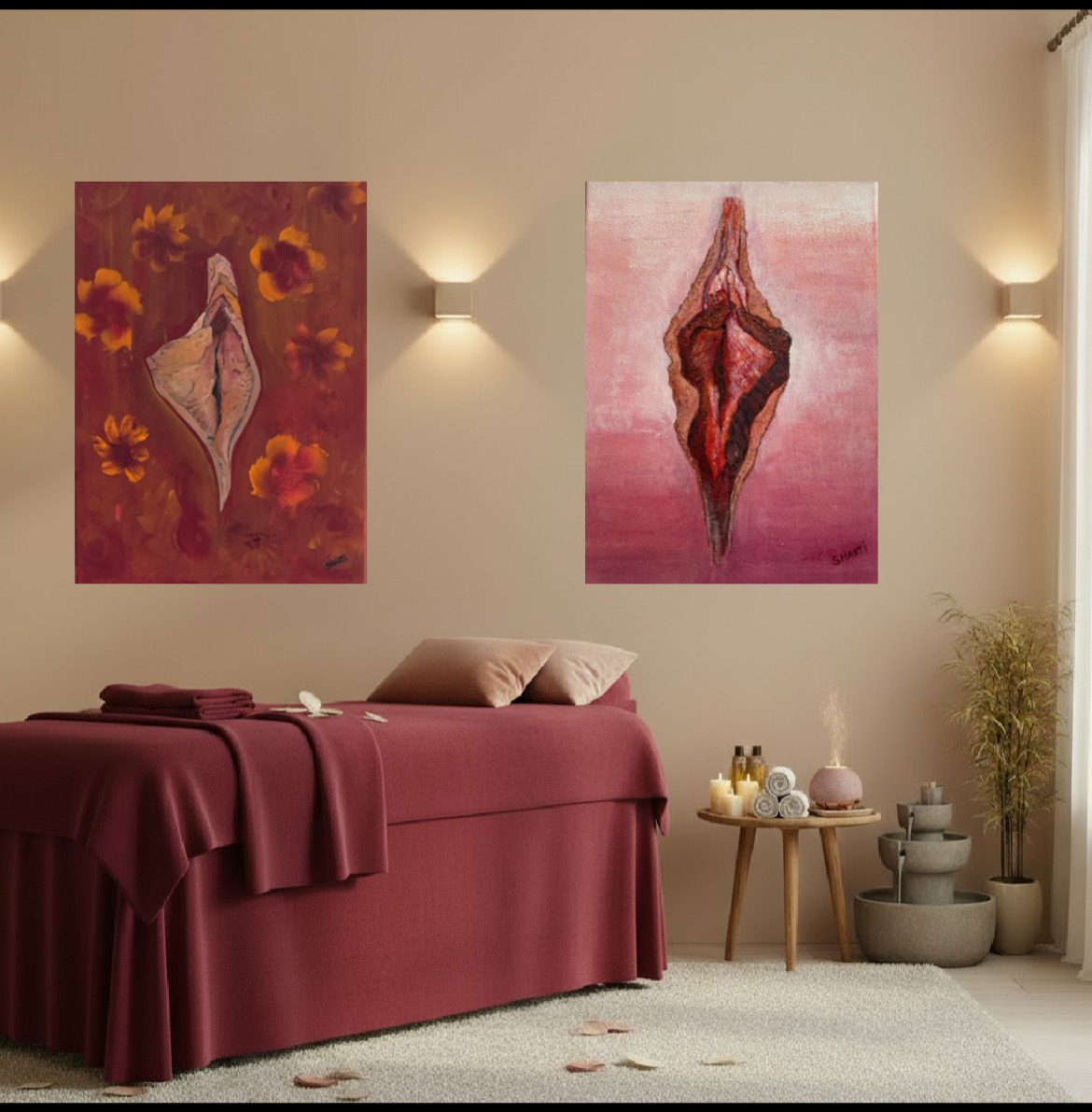
Discover original paintings, canvas prints, and commissioned works at ArtByShakt that serve as portals for embodied transformation, shadow work, and sacred ritual. Each creation invites you to embrace your entire emotional spectrum while fostering self-acceptance and deep healing. Visit ArtByShakt now to awaken your inner power and step fully into your authentic self with art crafted for spiritual seekers and those hungry for profound self-connection. Begin your healing journey today with art that honors your body, soul, and sacred energy.
Frequently Asked Questions
What is healing through art?
Healing through art is a process that enables emotional transformation and psychological restoration by engaging in creative practices. It emphasizes authentic self-expression and exploration, rather than producing formal art pieces.
How does embodied art facilitate healing?
Embodied art facilitates healing by integrating physical movement, emotional expression, and creative exploration. It allows individuals to access deeper insights into their emotions and experiences through multisensory engagement, promoting overall well-being.
What are some examples of transformative art practices?
Examples of transformative art practices include intuitive painting, movement meditation, and ritual art making. These practices focus on emotional exploration, self-discovery, and personal transformation through various creative modalities.
What ethical considerations should be taken into account in art healing?
Key ethical considerations in art healing include maintaining confidentiality, obtaining informed consent, and protecting participant safety. Practitioners should also be aware of cultural competence and power dynamics within the therapeutic relationship.